Louisiana Emerges as Nation's Leading Sugarcane-Producing State Despite Industry Challenges
By Cheryl Michelet
American Sugar Cane League
NEW ORLEANS—Louisiana's sugar industry continues to demonstrate its resilience and economic importance, now being recognized as the nation's leading sugarcane-producing state despite ongoing challenges from labor shortages, global market pressures, pests and unpredictable weather.
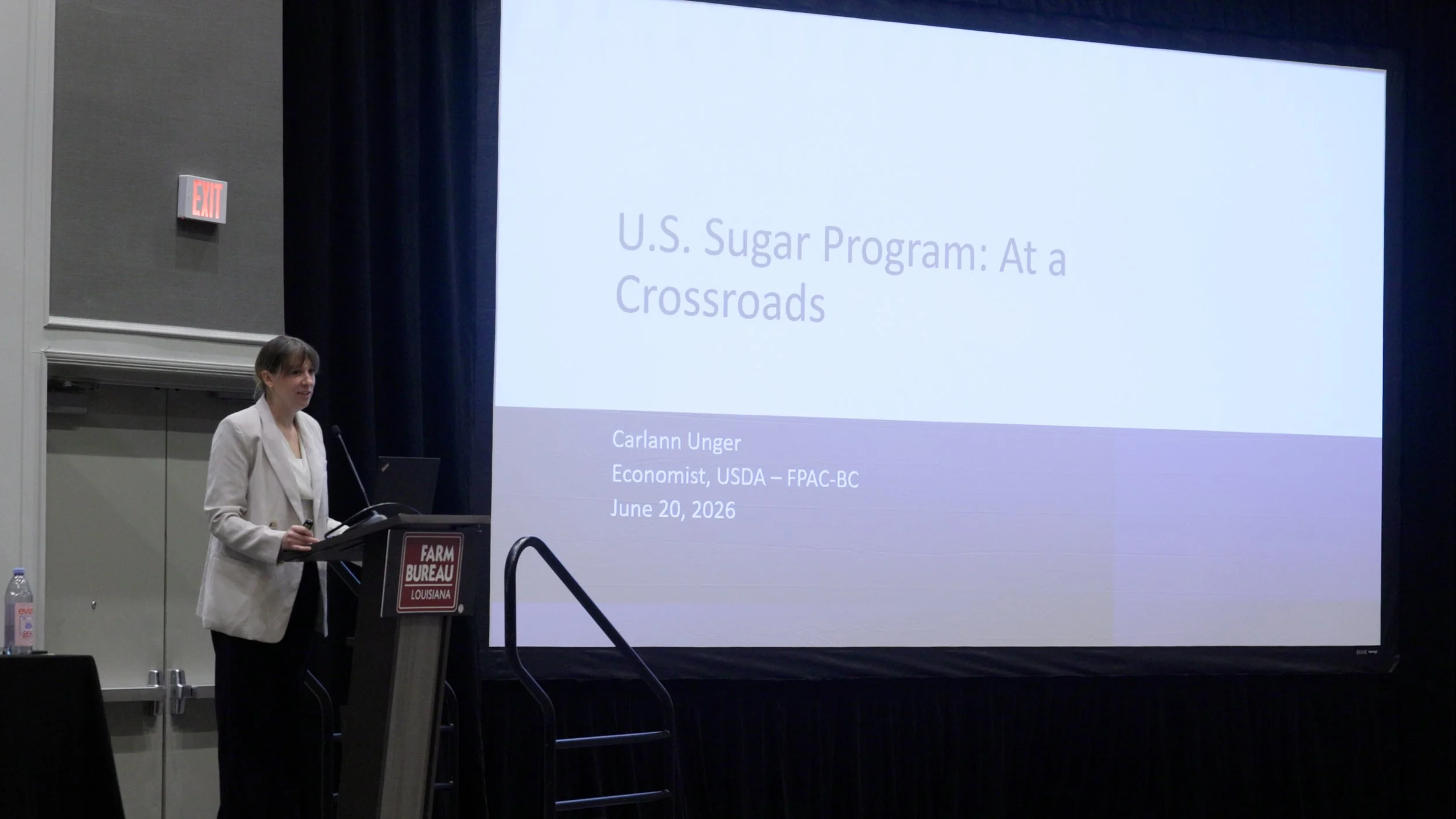
That message was front and center during the Louisiana Farm Bureau Federation's Sugar Conference, where industry leaders, policymakers and agricultural experts discussed the opportunities and challenges facing one of Louisiana's most important agricultural sectors.
"Louisiana has become the largest producer of cane sugar in the United States," Louisiana Commissioner of Agriculture and Forestry Mike Strain told attendees, noting the industry's continued growth and importance to rural communities across the state.
Industry leaders emphasized that sugar remains a major economic driver for the state, generating more than $4.3 billion annually and supporting thousands of jobs throughout Louisiana. Speakers highlighted several recent successes for the industry, including a Section 18 emergency exemption granted for the use of Sivanto Prime to combat the growing threat of Pasture Mealy Bug, a pest that has become an increasing concern for sugarcane producers. Louisiana was the first state in the nation to receive the exemption in the past 10 months.
Strain also pointed to legislative efforts aimed at protecting the long-term viability of the sugar industry. He noted that collaboration among growers, mills, lawmakers and industry organizations helped secure passage of legislation designed to prevent local ordinances from restricting the proper storage of bagasse, a byproduct used by sugar mills as a renewable energy source.
Federal policy remained a major topic of discussion during the conference.
Carlann Unger of the United States Department of Agriculture (USDA) Farm Production and Conservation Bureau told attendees that while domestic sugar supplies remain elevated, Unger said there are reasons for cautious optimism as demand improves and market conditions begin to stabilize.
"The future of the sugar program depends on USDA's ability to use its tools to rebalance the market," Unger said while discussing challenges associated with rising imports and outdated tariff structures that industry leaders say no longer provide the level of protection originally intended.
Despite market pressures, USDA forecasts indicate U.S. sugarcane production will remain strong, with Louisiana continuing to play a leading role in domestic sugar production.
Jamison Cruce, the American Sugar Cane League's representative in Washington, D.C., updated producers on federal legislation, trade issues and efforts to strengthen agricultural labor programs.
Cruce highlighted recent improvements to sugar loan rates and ongoing work to secure economic assistance and disaster relief funding for producers. He also discussed efforts to modernize trade policies and ensure that domestic sugar producers can remain competitive in a changing global marketplace.
American Sugar Cane League General Manager Jim Simon said the industry's top priorities remain labor and trade policy.
"We are unified as a sugar industry," Simon said, emphasizing ongoing efforts to modernize tariff rates and improve agricultural workforce programs.
Simon also highlighted continued investments in sugarcane research, including construction of a new USDA research greenhouse expected to be completed in 2027. He credited strong partnerships among growers, mills, the LSU AgCenter and USDA researchers for helping Louisiana producers remain productive and competitive.
Throughout the conference, speakers stressed that maintaining Louisiana's position as the nation's leading sugarcane-producing state will require continued investment in research, workforce development and sound agricultural policy.
Even amid uncertainty in Washington, fluctuations in the global sugar market and the ever-present challenges posed by weather and pests, the Sugarcane Conference still held a note of expressed confidence in the future of Louisiana sugar and the producers who continue to drive its success.